ASQS 2026 Syracuse 19th Annual Conference
Onondaga Community College
Friday, March 20, 2026, 8:00 AM – 4:30 PM
Conference Location: Mawhinney Hall, Room 345.
Parking is available directly across the road from the main entrance.
Registration through March 17, 2026 –
$55.00 ASQ Members – on site
$25.00 – Students – on site
$75.00 non-members – on site
$25.00 – virtual – ASQ Members
$35.00 – Virtual – non-members
Breakfast (muffins & fruit) & Lunch (deli sandwich box lunch) provided – assorted drinks.
Presentations will be made available after the conference on myASQ – Syracuse Section
8:00 – 8:30 AM Breakfast – Opening Remarks and Introductions
Bob Napoletano – Section Chair
8:30 – 9:30 AM – Audit like a Jedi Master –
Auditing is more than just asking questions. It is about effective communication, being a strong leader and remaining true to the purpose of the audit. Attend this session to avoid being a “Darth Vader Auditor”; the ones who use their audit “powers” for the dark side, to exert power or punish. Learn to be a Jedi Master of auditing adhering to the principles outlined in ISO 19011:2018 and using your skills to conduct collaborative interviews and build strong relationships with your auditees to ensure audits are value-added for the organization.
Susan Gorveatte

President of Gorveatte Consulting Inc., Susan has trained hundreds of auditors across North America and is a quality management coach specializing in ISO 9001 quality management systems. Susan is Chair-Elect of the Quality Management Division and is Past Chair of the technical program committee for World Conference on Quality and Improvement. She is a novice rock drummer and a fan of Star Wars and All Things Disney, Susan can often be found wandering around a Disney theme park on her time off.
9:30 – 10:00 – Break & Networking
10:00 – 11:00 PM – Agile Process Innovation – Hacking Lean Six Sigma for Results –
The economy has changed dramatically since Motorola launched Six Sigma over 30 years ago. The pace of change has also accelerated, which means that quality improvement needs to accelerate to keep up.
Applying the principles of Agile software development (which were borrowed from Lean) can accelerate the learning and application of Lean Six Sigma.
Over the last couple of years, presentations at quality conferences have offered a fresh approach to implementing Six Sigma. Companies such as Christus Health, Novartis and Underwriter’s Laboratory (UL) have demonstrated that with as little as one day of training, employees can generate measurable results. This is a radical change from the two-to-four week Green and Black Belt training followed by months and even years for Six Sigma projects to deliver results. This is an approach that I’ve advocated for over a decade. I call it Agile Lean Six Sigma.
As an added benefit, it helps screen participants for Green and Black Belt training to avoid the dreaded "one and done" projects so often associated with LSS training.
Over the last few years, the Harvard Business Review has published many articles about the power of Agile. Unfortunately, Lean Six Sigma is anything but Agile. “Six Sigma is too complex and time-consuming to fit into a regular workday,” says author, Thomas Wedell-Wedellsborg. “We need tools that don’t require the entire organization to undergo weeks-long training programs.”
Jay Arthur

Jay teaches people how to turn data into dollars using Microsoft Excel. Jay helped a healthcare system reduce denied insurance claims by $5 million. Jay is the author of Lean Six Sigma for Hospitals 2nd (McGraw 2014), Agile Process Innovation and QI Macros for Excel—a software package that automates all of the charts, graphs, and documents required for Agile Process Innovation.
11:00 AM - 12:00 PM – Standard Work and its Relationship to Continuous Improvement –
Taiichi Ohno, the father of the Toyota Production System, is attributed with the saying “Without standards, there can be no improvement”. During this presentation, the relationship between standard work and continuous improvement will be examined. Ohno’s assertion will be scrutinized in general and in the context of the Toyota Kata Improvement Model and the Training Within Industry Job Instruction and Job Methods programs.
Scott Laundry
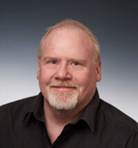
Scott brings over three decades of experience with manufacturing to his role as a Senior Project Manager for TDO. He combines a strong engineering and management background with extensive practical experience applying Lean Six Sigma (LSS).
His early career included industrial controls Sales and Applications Engineering roles.. Later he spent more than 21 years with Albany International in various roles including Plant Engineer, Manufacturing Engineering Manager, Global Raw Materials Manager and full time LSS Black Belt. Scott developed a passion for continuous improvement and during his last 8 years with Albany International was able to teach and apply LSS concepts to a supply chain spanning 11 countries.
Scott has continued to help spread operational excellence in the last 10 years while at TDO where he has trained over 100 LSS Green and Black Belts as TDO’s resident LSS Master Black Belt. He has also accumulated thousands of hours teaching, coaching and applying the TWI Training Within Industry programs and is TWI Institute certified in TWI JI,JR,JM,JS and Toyota Kata.
12:00 – 1:00 PM – Lunch & Networking
1:00 – 2:00 PM – Preventing Overload in Interpersonal Communication –
Clear communication failures rarely stem from a lack of effort or expertise, they are often the result of overloaded systems, unclear intent, or poorly designed safeguards. In this 45-minute session, Jeremiah Poulsen examines communication through a systems and quality lens, using the metaphor of an electrical circuit to explore how breakdowns occur and how they can be prevented.
Building on his framework Five Circuit Breakers for Clear & Confident Communication, Jeremiah reframes these “breakers” not as quick fixes, but as protective mechanisms, early warning systems that prevent damage, surface misalignment, and prompt deeper diagnosis when communication energy begins to overload. The five breakers, Purpose, Presence, Plan, Practice, and Punctuate, do not generate power; instead, they regulate flow, reduce noise, and help teams identify where meaning, intent, or structure may be failing upstream.
Participants will explore how anxiety, distraction, and unexamined assumptions can trip these safeguards in conversations, meetings, and presentations. Through stories, practical examples, and guided reflection, attendees will learn how to design communication systems that fail early, fail safely, and preserve trust, rather than relying on reactive resets after damage has already occurred.
Designed for professionals who value clarity, reliability, and continuous improvement, this session offers a practical diagnostic framework for strengthening leadership communication, improving collaboration, and sustaining confidence in high-stakes environments.
Jeremiah Poulsen
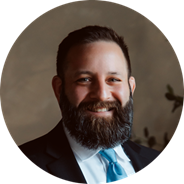
Jeremiah is honored to help leaders recognize the power of their influence and grow their credibility in order to achieve what they once thought impossible. His personal affinity toward authenticity, prioritization of the good of others, and belief that positive transformation is always possible aid his clients in taking their growth and impact to the next level, whatever that may be. Jeremiah’s unique coaching approach and specialized frameworks help leaders develop and flourish through client-crafted action plans and means of accountability. His ideal client is one who is ready to do the work, elevate others above themselves, and believe anything is possible.
2:00 – 2:30 PM– Break & Networking
2:30 – 3:30 PM – Why Corrective Actions Fail—and How to Fix the Process
Corrective action is one of the most misunderstood —and least effective—elements of quality management systems. Too often, issues are “closed” without preventing recurrence, leading to repeat findings, audit fatigue, and minimal improvement.
This session breaks down why corrective actions fail, clarifies the difference between correction, containment, and corrective action, and provides practical, system-focused techniques for identifying true root causes and implementing actions that actually work. Participants will learn how to design corrective actions that address process weaknesses, verify effectiveness meaningfully, and drive real, sustainable improvement across their organizations.
Ideal for: Quality managers, auditors, process owners, and anyone responsible for corrective actions.
Maria Altieri
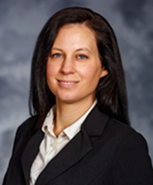
· 10 years on Active Duty in the Army, serving in medical, HR and logistical positions
· 2 years in the Army Reserves as the Company Commander of a Drill Sergeant Unit
· 1 year in the NY Army National Guard as a logistics Officer
· 3 years at TRW Automotive as a Senior Production Supervisor and Senior Quality Engineer
· 7 Years at Marquardt Switches working as various roles in quality, program management and business development
· LSS Black Belt
· Basic HACCP Certified
· TWI: JI certified
· ISO 9001 / IATF 16949 / ISO 13485 / AS 9100 Lead Auditor Certified
· Project Manager Professional Candidate
3:30 – 4:30 PM Mastering Change with Lean: ADKAR Meets 5W2H for Sustained Success – Manny Veloso & Bob Napoletano
Change management is crucial for successful improvement activities.
Poor change management often leads to temporary changes that don't stick.
The presentation will focus on the ADKAR model with the addition of these tools to ensure lasting change:
· 5W2H Analysis
· 5 Whys Technique
ADKAR is a proven change management workflow that helps ensure sustainability of changes in the workplace.
In this presentation we explore applying the 5W2H framework and the 5 Whys technique to each step of the ADKAR model. Change agents will achieve greater clarity on the steps needed to implement any change more effectively.
By using a case study to integrate the tools, we expect the participants to gain a better understanding of integrating the tools. Using the 5W2H tool, 5 Whys technique, and the ADKAR model together creates a comprehensive approach to change management with fewer overlooked areas resulting in better changes.
Manny Veloso
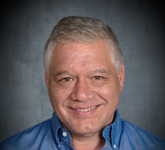
Manny’s hands-on approach has provided practical, real-world solutions for countless companies. Manny holds a Masters Degree in Business Administration from Rider University and a BS in Industrial Engineering from Penn State.
Manny has delivered projects and trained internationally. He has a Master Black Belt certification and is a guest lecturer at Holy Family University, Temple University and spoken at industry conferences.
Bob Napoletano

ASQ Member since 1981. Senior member, Binghamton Section Chair, Treasurer, Secretary and now Syracuse Chair. An accomplished Professional in Quality Management, Quality Engineering, business management and education. Experienced in electronics assembly, metal fabrication, plastics injection molding & manufacture of gasket & flooring materials. Additional experience in consulting and education / training. Industry experience includes OEMs in computers, office equipment, flight simulation, electronic timers and controls, railroad brake systems, 4G equipment telecommunications and radar equipment.
4:30 PM – Closing & Thanks